 11 Mar, 2026
457Views
11 Mar, 2026
457Views Modern architecture and interior design have evolved significantly in recent years, with a strong focus on minimalism, durability, and seamless aesthetics. One of the materials that has gained tremendous popularity in contemporary construction is large format porcelain slabs. These oversized porcelain surfaces are widely used in residential, commercial, and architectural projects due to their elegant appearance and high performance.
Unlike traditional tiles, porcelain slab tiles are designed in larger dimensions, allowing designers and architects to create expansive surfaces with fewer grout lines. This results in a clean and sophisticated look that enhances modern interior spaces. Large format slabs are commonly used for flooring, wall cladding, kitchen countertops, and even building facades.
Another reason for the increasing demand for large format porcelain tiles is their durability and low maintenance requirements. These slabs are manufactured using advanced technology that makes them resistant to scratches, stains, and moisture. Because of these qualities, porcelain slabs have become a preferred surface material for modern homes, offices, hotels, and retail spaces.
In this guide, we will explore the benefits, sizes, and applications of large format porcelain slabs, helping homeowners, architects, and designers understand why these surfaces are becoming a key element in modern design.
What Are Large Format Porcelain Slabs?
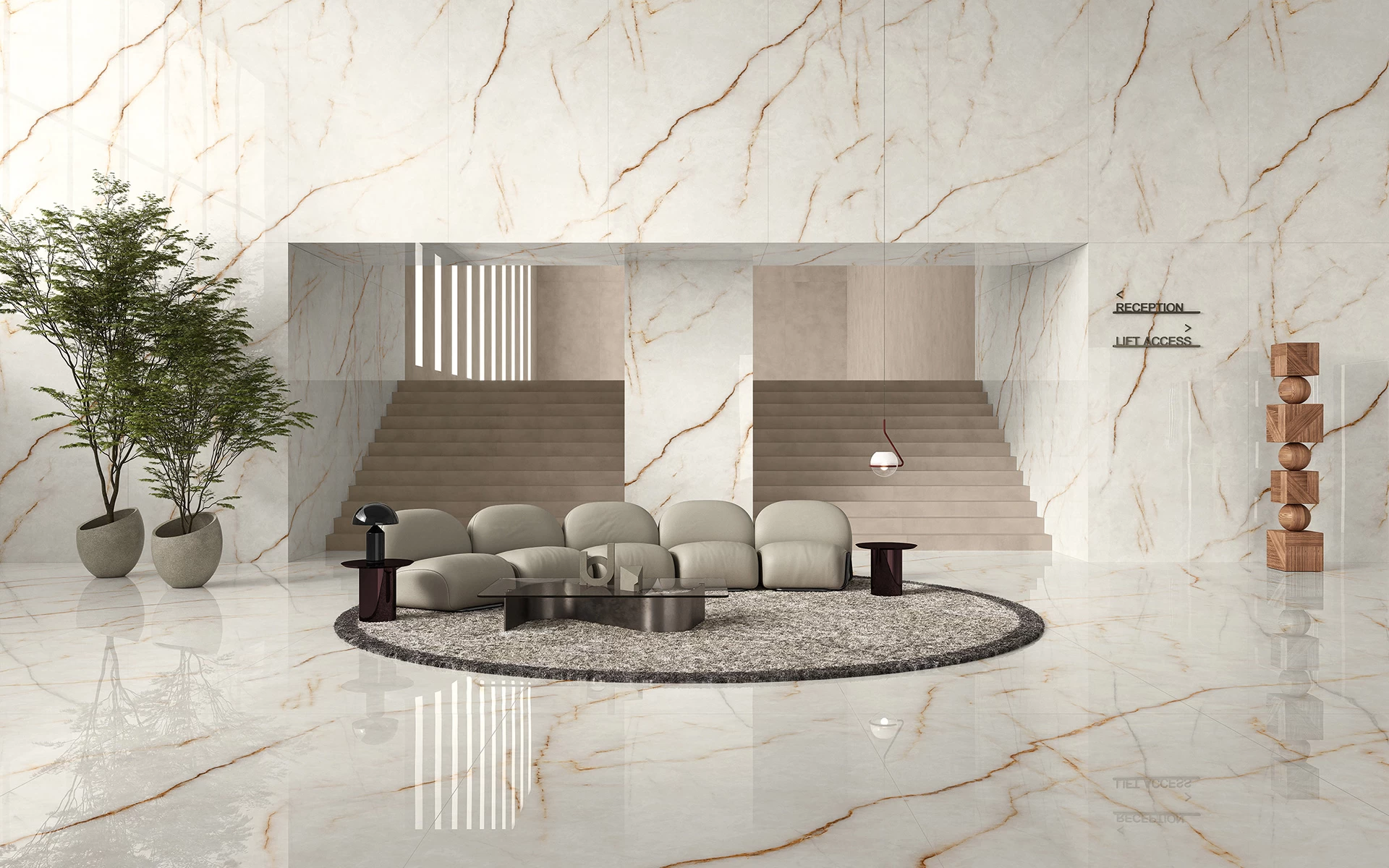
Large format porcelain slabs are oversized porcelain tiles designed to create seamless surfaces with minimal grout lines. These slabs are manufactured using refined clay and minerals that are fired at high temperatures, making them extremely durable, dense, and resistant to moisture. They are widely used for floors, walls, countertops, and architectural surfaces.
Porcelain slabs are essentially a larger version of standard porcelain tiles. While traditional tiles usually come in smaller sizes, large format porcelain slabs are produced in larger dimensions to create continuous surfaces that enhance the visual appeal of a space.
These slabs are manufactured using advanced pressing and firing techniques, which make them highly durable and suitable for both residential and commercial environments. The result is a surface that combines beauty, strength, and practicality.
Another key feature of porcelain slab tiles is their ability to replicate natural materials such as marble, granite, wood, and stone. This allows designers to achieve luxurious aesthetics without using natural materials that may require higher maintenance.
What Are Porcelain Slab Tiles?
Porcelain slab tiles are made from a refined mixture of clay, minerals, and natural materials that are compressed under high pressure and fired at extremely high temperatures. This manufacturing process creates a dense, non-porous material that is highly resistant to moisture, stains, and wear.
One of the biggest differences between porcelain slab tiles and traditional tiles is their size. Standard tiles usually range from small to medium sizes, whereas slab tiles are designed to cover larger surfaces with minimal joints.
Because of their large dimensions and thin yet strong structure, porcelain slabs provide a sleek and contemporary appearance that is highly valued in modern architecture.
These slabs are also known for their exceptional performance characteristics, including resistance to heat, chemicals, and scratches. This makes them suitable for both indoor and outdoor applications.
Common Sizes of Large Format Porcelain Slabs
Large format porcelain slabs are available in a variety of sizes to suit different design requirements. The larger dimensions help create seamless surfaces with fewer grout lines, enhancing the overall appearance of the space.
Popular Slab Sizes
Some commonly used large format porcelain slab sizes include:
- 1200 × 2400 mm
- 800 × 1600 mm
- 1200 × 1200 mm
- 1600 × 3200 mm
These sizes allow designers to cover larger surfaces with fewer joints, creating a smooth and uninterrupted look.
Large slab tiles are particularly useful in spaces where designers want to achieve a clean and modern aesthetic. The reduced number of grout lines also makes maintenance easier compared to traditional tile installations.
Benefits of Large Format Porcelain Slabs
Large format porcelain slabs offer several advantages that make them a preferred choice for modern construction and interior design.
Minimal Grout Lines
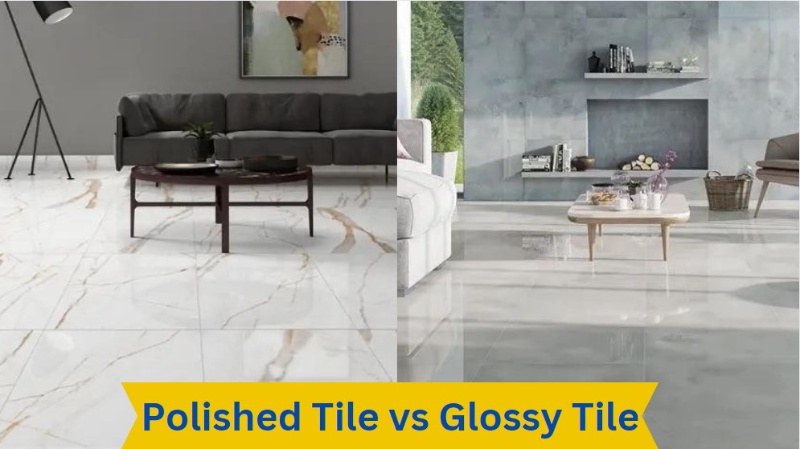
One of the most significant benefits of large format tiles is the reduction of grout lines. Fewer grout joints create a cleaner and more seamless appearance, which enhances the visual appeal of the space.
Modern Aesthetic Appeal
Porcelain slabs contribute to a contemporary design style that emphasizes simplicity and elegance. Their large size allows designers to create bold and sophisticated surfaces that elevate the overall interior design.
High Durability
Porcelain slabs are known for their exceptional strength and durability. They are resistant to scratches, stains, and heavy foot traffic, making them suitable for high-use environments.
Easy Maintenance
The smooth and dense surface of porcelain slabs makes them easy to clean and maintain. Unlike natural stone surfaces, porcelain slabs do not require sealing and are highly resistant to stains.
Versatile Applications
Another major advantage of porcelain slab tiles is their versatility. They can be used in a variety of applications, including floors, walls, countertops, and building facades.
Applications of Large Format Porcelain Slabs
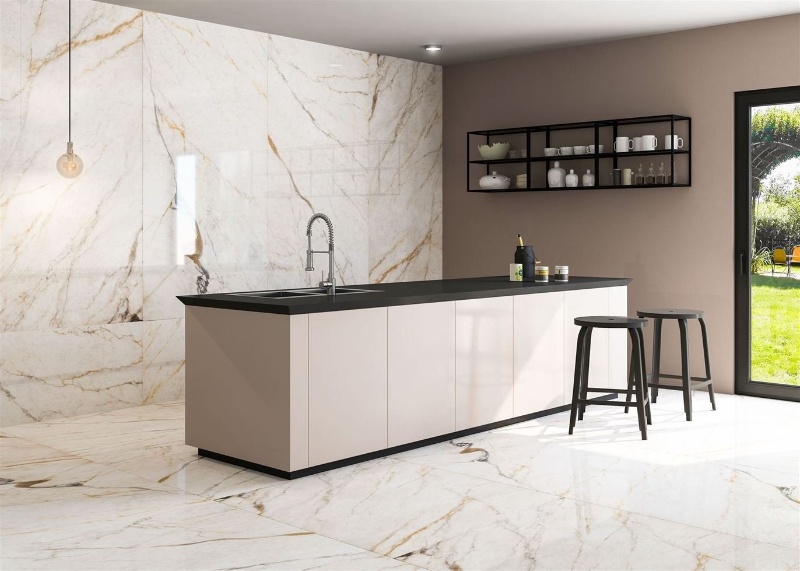
Because of their durability and aesthetic appeal, large format porcelain slabs can be used in a wide range of applications.
Flooring
Large slab tiles are commonly used for flooring in residential and commercial spaces. Their large dimensions create seamless surfaces that enhance the sense of space.
Wall Cladding
Porcelain slabs are widely used for wall cladding in living rooms, bathrooms, and commercial interiors. The large surface area allows designers to create dramatic feature walls.
Kitchen Countertops
Porcelain slabs are heat-resistant and highly durable, making them an excellent choice for kitchen countertops and work surfaces.
Bathroom Walls
Luxury bathrooms often feature porcelain slab walls that create a sleek and modern look with minimal grout lines.
Building Facades
In modern architecture, porcelain slabs are increasingly used for building facades because they provide durability and aesthetic appeal.
Large Format Porcelain Slabs vs Traditional Tiles
The main difference between large format porcelain slabs and traditional tiles lies in their size and design impact.
| Feature | Porcelain Slabs | Traditional Tiles |
|---|---|---|
| Tile Size | Large | Smaller |
| Grout Lines | Minimal | More visible |
| Design Impact | Seamless appearance | Segmented look |
| Installation | Professional required | Easier installation |
Large format slabs provide a more seamless and modern appearance compared to traditional tiles, making them a preferred choice for contemporary interiors.
Installation Considerations for Porcelain Slabs
Although porcelain slab tiles offer many advantages, their installation requires proper planning and expertise.
Professional Installation
Due to their large size, porcelain slabs should be installed by experienced professionals who have the necessary tools and skills.
Surface Preparation
The installation surface must be clean, level, and properly prepared to ensure a secure bond between the slab and the substrate.
Specialized Tools
Handling and installing large slabs requires specialized tools such as suction lifters and tile leveling systems.
Proper installation ensures that the slabs remain stable and perform well over time.
Why Large Format Tiles Are Popular in Modern Architecture
Modern architecture often emphasizes clean lines, open spaces, and minimal design elements. Large format porcelain tiles perfectly align with these design principles.
Architects and designers prefer large slab surfaces because they create a sense of continuity within a space. Fewer grout lines make rooms appear larger and more elegant.
Additionally, the wide variety of designs available in porcelain slabs allows designers to replicate natural materials such as marble and stone without the maintenance challenges associated with those materials.
Because of these advantages, modern porcelain slabs have become a key element in contemporary interior design.
Antovia Surfaces: A Trusted Name in Modern Surface Solutions
In the evolving surface materials industry, quality, durability, and design innovation are essential factors when choosing a supplier. Antovia Surfaces has established itself as a trusted name in modern surface solutions by focusing on high-quality materials and contemporary design collections.
Antovia Surfaces offers a range of premium surface products designed to meet the demands of modern architecture and interior design. By combining advanced manufacturing technology with creative design concepts, the brand provides surfaces that deliver both durability and aesthetic appeal.
The company's porcelain surface collections are developed to offer strength, stability, and long-term performance. These surfaces are designed for residential interiors, commercial environments, and architectural projects where durability and style are equally important.
Through a strong commitment to product quality and design innovation, Antovia Surfaces continues to deliver reliable surface solutions for modern construction and interior design projects.
Conclusion
Large format porcelain slabs have become one of the most innovative surface solutions in modern construction and interior design. Their ability to create seamless surfaces, combined with exceptional durability and low maintenance requirements, makes them a preferred choice for architects, designers, and homeowners.
From flooring and wall cladding to countertops and building facades, large format porcelain slabs offer versatility and aesthetic appeal for a wide range of applications. Their large dimensions reduce grout lines and enhance the visual continuity of interior spaces.
As modern architecture continues to evolve, porcelain slab tiles are expected to remain a popular choice for creating elegant and durable surfaces in residential and commercial environments.
Frequently Asked Questions
1) What are large format porcelain slabs?
Large format porcelain slabs are oversized porcelain tiles designed to cover large surfaces with minimal grout lines, creating a seamless and modern appearance.
2) What sizes are porcelain slab tiles available in?
Common sizes include 1200 × 2400 mm, 800 × 1600 mm, and 1600 × 3200 mm, although other dimensions may also be available depending on the manufacturer.
3) Are porcelain slabs suitable for flooring?
Yes, porcelain slabs are highly durable and resistant to scratches and stains, making them suitable for flooring in both residential and commercial spaces.
4) Can porcelain slabs be used for walls?
Yes, porcelain slabs are widely used for wall cladding in living rooms, bathrooms, kitchens, and commercial environments.